 Design
Nano Banana 2.1
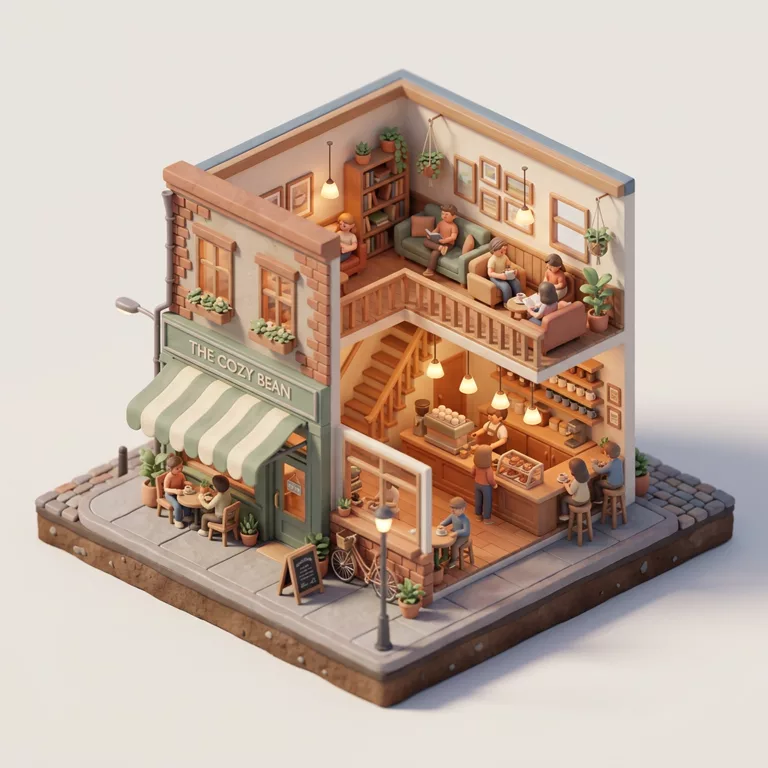
Isometric coffee-shop diorama
Build a miniature cutaway café with tiny customers, warm lighting, and a simple background.
Text only
Illustrate an original invention on a vintage technical sheet with coordinated views, numbered details, aged paper texture, and crisp linework.
Choose this prompt for a fictional invention plate, a story-world prop, or a vintage product-concept illustration. The coordinated elevation, front view, and component study make the object feel considered from several angles. Supply a clear mechanism idea and a small material palette so the three views can share recognizable construction details.
Illustrate [INVENTION] as a decorative technical concept sheet inspired by nineteenth-century drafting. Place a large side elevation in the center, a smaller front view above it, and an exploded component study below. Use fine sepia ink lines, restrained crosshatching, and numbered callouts on lightly aged cream paper. Make [MATERIALS] recognizable through consistent surface marks and joinery details. Keep the invention's proportions and main mechanisms visually aligned across all three views. Add the small heading "DESIGN STUDY" and the year "[YEAR]", with only a few brief handwritten component labels. Leave broad archival margins and subtle fold marks. Avoid official seals, legal claims, and dense invented paragraphs. The result should feel like an inventor's carefully composed notebook plate, photographed evenly from above.
Copy the prompt first, then paste it into Gemini to start an image-generation chat. This link opens Gemini; it does not prefill or generate an image.
See what each instruction controls, then adjust the parts that matter to your image.
a large side elevation in the center, a smaller front view above it, and an exploded component study below
Assigns a position and relative size to each technical-looking view.
fine sepia ink lines, restrained crosshatching, and numbered callouts
Defines the line, shading, and annotation style of the illustrated sheet.
consistent surface marks and joinery details
Uses repeated drawing conventions to make the chosen materials recognizable.
the invention's proportions and main mechanisms visually aligned across all three views
Keeps the depicted object connected across its elevation, front view, and component study.
only a few brief handwritten component labels
Restricts annotation density so the drawings remain more prominent than the text.
No image is necessary. Optionally attach your own invention sketch to guide the overall silhouette and component arrangement.
Replace the bracketed fields with the details for your case.
No image is necessary. Optionally attach your own invention sketch to guide the overall silhouette and component arrangement.
Paste the complete prompt into your image tool, then review the result against your goal.
DesignBuild a miniature cutaway café with tiny customers, warm lighting, and a simple background.
 Design
Combine a short headline, a warm lifestyle scene, and a clear text hierarchy for a carousel opening slide.
 Design
Generate a three-by-three sheet of the same character with different emotions and short captions.